

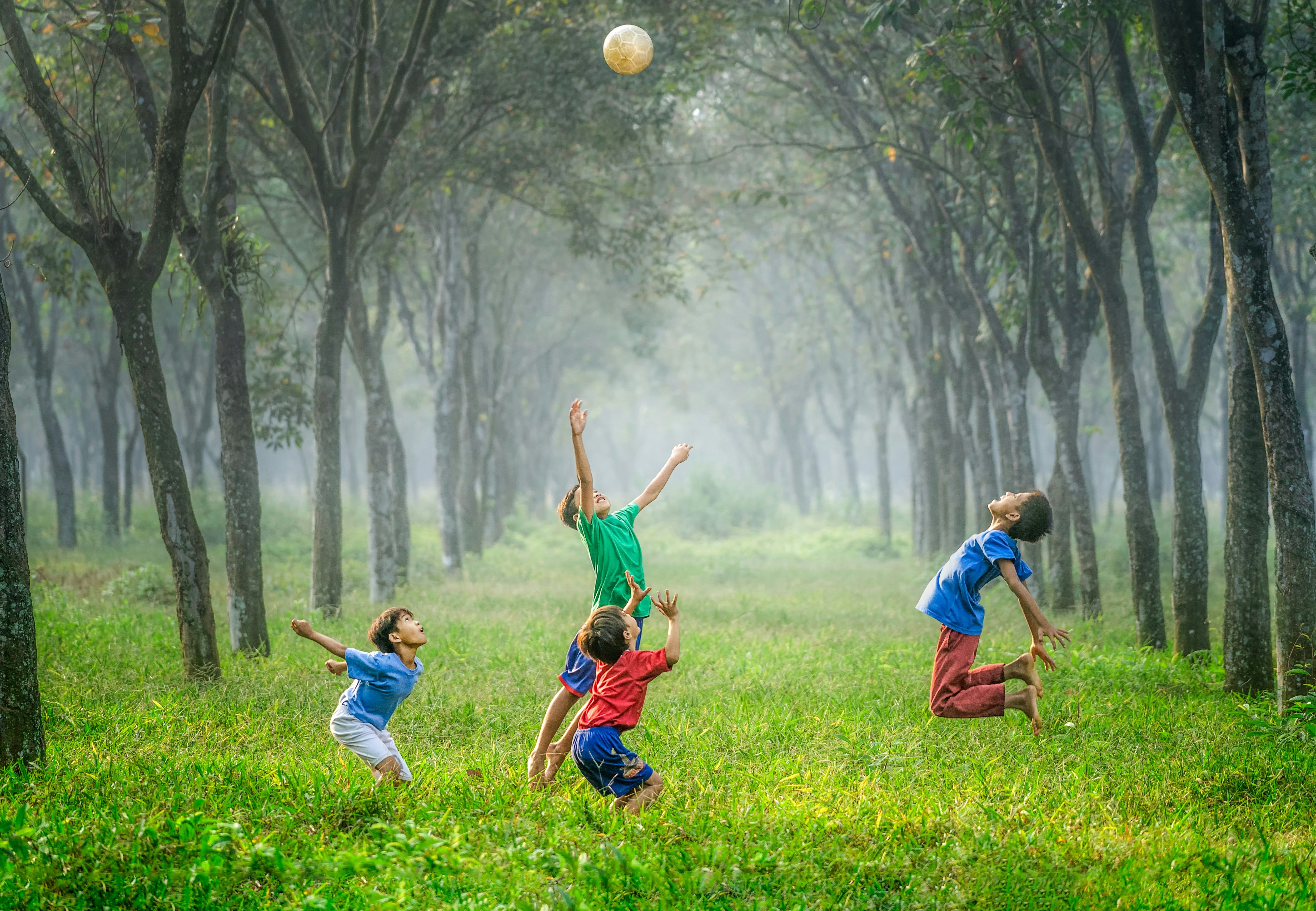
Productivity and efficiency may be useful measures, but they also set the context for the work we do. Performance becomes something we measure rather than something we experience and enjoy. The more we try to control things, the more afraid we become of the things that we cannot control. Sometimes I think it sucks the soul out of a conversation about work, because it changes the language we use, or gives that language new meaning. Our work loses resonance. We lose self-efficacy. We end up just following the bouncing ball.
The example that struck me this week, in conversation, was play. Talk to an educator, or to someone in the games industry, and play is the work. Talk to someone for whom measurement is the prime language of the business, and play takes on a superfluous, frivolous quality.
I have just finished Kai-Fu Lee’s new book, AI Native: The Mandate to Transform Your Company. It offers excellent insight into the world of work seen through the lens of what artificial intelligence might make possible. For me, though, it moves steadily into a dystopia where everything is measured all the time and captured in dashboards. It is easy to see how productive and efficient that world would be, and how joyless. Where play is mentioned, it is in the context of performance.
Yet play is the way skilled people deliberately take on uncertainty in conditions where it is safe to be wrong. It is how we learn, and how we form the judgement we need when being wrong is no longer safe.
Richard Sennett, in The Craftsman, identifies two kinds of play. One is the game whose rules are set before you begin. The other is the open kind: a child fingering a piece of felt to find out what it does. Sennett values the second more. Craftsmanship, he argues, draws on what children learn in play’s dialogue with physical materials.
Gregory Bateson noticed that animals signal “this is play”. The playful nip stands in for the bite, but does not mean what a bite means. The signal creates a frame in which it is safe to try a dangerous move. There are many other examples, and I have put some in a footnote to this post.
When we do play at work, it is most often a structured version. We go on away days or leadership retreats and learn to bond by climbing trees. We don’t decide what to do. We are told what to do, and told that it is play. In every sense of the word, it is performative. We are being watched and judged by our peers.
Play matters. James March described playfulness as “the deliberate, temporary relaxation of rules in order to explore the possibilities of alternative rules.” C. Thi Nguyen, in The Score, describes games as a way to try on values safely, values we would not adopt in the rest of our lives. His larger point is the one I began with: in life, unlike games, the metrics follow us home, and we cannot easily opt out.
Richard Feynman, burnt out at Cornell, decided he would “play with physics, whenever I want to, without worrying about any importance whatsoever.” He worked out the wobble of a plate someone threw in the cafeteria. “The diagrams and the whole business that I got the Nobel Prize for,” he wrote, “came from that piddling around with the wobbling plate.”
So this seems a good time to play with AI. Put to one side, for a moment, the hysteria, the hype and the promotion, and look at the technology for what it is and what it is not. Play with it. Hold it up to the light. See what it will do and what it will not, without judging it in advance.
AI, for all of us, is an unfolding story. For artisans, AI is material, and before we can use a material, we have to understand it.
“Those who do not have power over the story that dominates their lives, power to retell it, to rethink it, deconstruct it, joke about it, and change it as times change, truly are powerless.”
Salman Rushdie
It’s time to play. The work it requires of us will make itself known.
Footnote: more on play
Johan Huizinga, Homo Ludens (1938). “Play is older than culture.” The source of the “magic circle”, the bounded space in which play happens.
D. W. Winnicott, Playing and Reality (1971). “It is in playing and only in playing that the individual child or adult is able to be creative.”
Kenneth Stanley and Joel Lehman, Why Greatness Cannot Be Planned (2015). The best results on their Picbreeder experiment “were almost always not their objective.”
Bernard Suits, The Grasshopper (1978). Playing a game is “a voluntary attempt to overcome unnecessary obstacles.”
David Pye, The Nature and Art of Workmanship (1968). The workmanship of risk, where the outcome is at stake with every stroke and play has its natural home.