

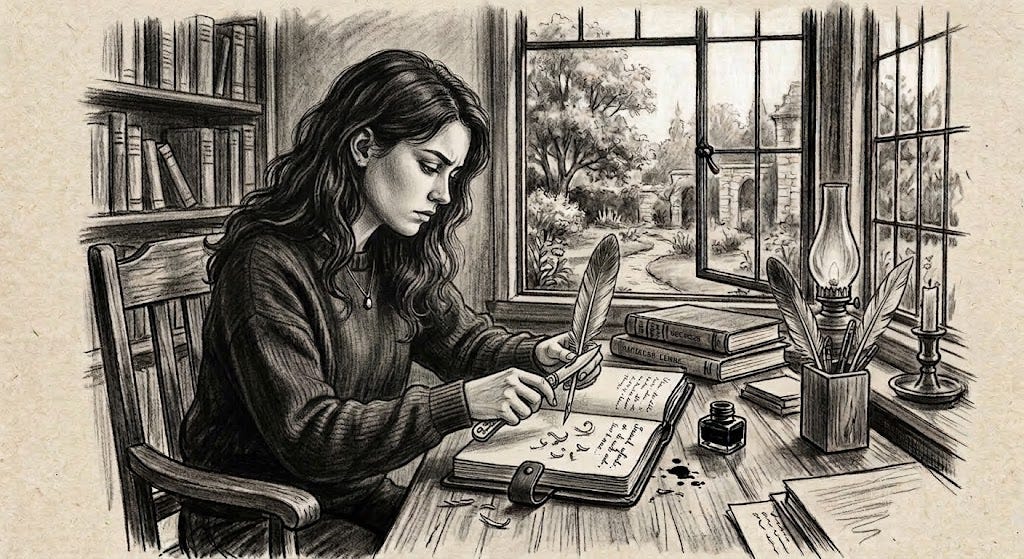
I wrote in last week’s piece about the nature of sharpening our tools because we all use them differently. That thought took me this week into the nature of reaching out to others and the tools we use: words, pictures, drawings, sketches, and anything we use to communicate with others when we’re not there.
I’ve been considering how quickly they could lose their edge. Words that we use or that fall into common parlance have an impact in their early days, but then just become part of the scenery. Phrases like “tipping point,” “unprecedented,” “at pace,” and others quickly become blunt. Use of them becomes routine and lazy. They fall easily to hand, but demonstrates a lack of thought and a sense of being hurried, as if we cannot find something more appropriate, sharper, or more meaningful to convey what we’re trying to say.
I’ve long been a fan of Sue Heatherington’s work, whose skill at this is evident daily. Lately, I’ve come across the work of Paul Duggan , who, in a different way, does something similar. This sense of craft is what separates some Substacks from others, makes some slide decks stand out, whilst others just cause PowerPoint poisoning. I found somebody who takes routine reports and turns them into infographics using AI. It’s a simple trick but really powerful. It shows thought and care for the people they’re communicating with. It is the difference between a mortise joint and a staple.
When we’re busy trying to be efficient and productive, we can let words become templates. Something can be used when we don’t have the time or are prepared to make the effort to author them. Doing so, we send them hurtling towards the average, barely distinguishable from other people using the same templates.
The way we transfer the product of our unique imaginations, into media to be transmitted to others, matters more than ever. Even where we prompt carefully and review output diligently, the language of AI dulls the edge of the effort that we have put in. Sometimes it doesn’t matter much because we’re communicating en masse to people we don’t know. They do not understand us well enough to know the difference between what AI produces for us and what we produce for ourselves. However, the moment we have their attention and they start reading us, or seeing our work in whatever form on a regular basis, AI stands out like a sore thumb.
Amongst our greatest human needs is to be seen and heard. If we want that to happen, we have to turn up in person, not send a proxy.